


A traditional Rajasthani food experience is about much more than sampling famous regional dishes. It offers a way to understand the state's geography, climate, culinary ingenuity, cultural diversity, and long-standing hospitality traditions through food.
From the rich flavours of dal baati churma and the distinctive taste of ker sangri to the comforting sweetness of ghewar and malpua, Rajasthan's cuisine brings together ingredients and techniques shaped by generations. Some dishes reflect the need to preserve food in an arid climate, while others are associated with festivals, family gatherings, celebrations, and elaborate meals.
Royal dining adds another dimension to this culinary heritage. Historically influenced by courtly kitchens, regional produce, seasonal ingredients, and community traditions, the food culture of Rajasthan is diverse rather than defined by a single menu. The experience can range from a simple home-style meal to a festive thali or a thoughtfully arranged dinner in a heritage-inspired setting.
For travellers, food can become one of the most memorable parts of exploring Rajasthan. It provides an opportunity to discover local flavours, understand regional customs, and appreciate the relationship between hospitality and the sharing of meals.
For those planning a heritage-oriented getaway, Talabgaon Castle Heritage Resort in Rajasthan offers a setting in which to complement a stay with dining and leisure experiences. Guests interested in particular Rajasthani dishes, menus, or traditional dining arrangements should confirm the current options directly with the property.
Understanding the Food Culture of Rajasthan
Rajasthan's cuisine reflects the state's varied landscapes, from arid desert regions to agricultural areas and historic trading centres. Climate, access to ingredients, food preservation, religious traditions, community practices, and household cooking methods have all influenced what people eat.

Unlike cuisines that rely heavily on a single set of fresh ingredients, many traditional Rajasthani dishes demonstrate how cooks made creative use of locally available grains, pulses, dairy products, spices, dried vegetables, and preserved ingredients.
Food Shaped by Climate and Geography
In parts of Rajasthan where rainfall is limited and fresh vegetables may historically have been less consistently available, cooks developed dishes using ingredients that could be stored for longer periods.
Dried berries, beans, desert plants, pulses, millet, and other hardy ingredients became important in different regional food traditions. Techniques such as drying, roasting, slow cooking, and preparing foods with clarified butter helped shape distinctive flavours and textures.
Ker sangri is a particularly recognisable example. Prepared using desert beans and berries, it demonstrates how regional ingredients can become central to a cuisine's identity.
The Importance of Grains and Pulses
Bajra, or pearl millet, has a strong place in the food traditions of Rajasthan, especially in areas where hardy crops have historically been important. Wheat, maize, pulses, and other grains also feature across the state.
These ingredients appear in different forms, including rotis, porridges, lentil preparations, and combinations served with vegetables or dairy-based accompaniments.
Dal baati churma brings several culinary elements together: lentils, baked wheat dough, and a sweet or savoury preparation made from crushed baati. The combination demonstrates the variety of textures and flavours that characterise many traditional Rajasthani meals.
Regional Diversity Within Rajasthan
Rajasthan's food culture is not uniform. Ingredients, preparation methods, and preferred dishes vary across regions and communities.
Marwar is often associated with robust flavours and dishes that make creative use of dried ingredients. Mewar has its own culinary traditions shaped by local agriculture, regional customs, and historic influences. Jaipur and other parts of eastern Rajasthan offer additional variations, reflecting different food habits, ingredients, and cultural exchanges.
This diversity means that an authentic Rajasthani food experience should not be limited to a short list of famous dishes. It should also leave room for local specialities, seasonal preparations, and the everyday foods that residents enjoy.
Famous Traditional Rajasthani Dishes to Try
For visitors discovering Rajasthan's cuisine for the first time, several dishes offer a useful introduction to its flavours and cooking traditions.

The following guide explains what makes each dish distinctive and what travellers can expect from its ingredients and preparation. Availability varies between restaurants, households, resorts, and regions.
Dal Baati Churma
Dal baati churma is among the most widely recognised dishes associated with Rajasthan.
The meal combines three components:
- Dal: Lentils cooked with spices and seasoning.
- Baati: Firm wheat-flour dumplings traditionally baked or roasted until cooked through.
- Churma: A sweet preparation made from crushed wheat-based baati or similar dough, combined with ghee and sweetening ingredients.
The components balance one another. Dal provides a savoury, spiced element, baati contributes a substantial wheat-based texture, and churma adds sweetness.
The dish is closely associated with Rajasthani food culture and is commonly enjoyed during family meals, celebrations, and special occasions. Preparation methods differ between households and regions.
What makes it worth trying: It introduces visitors to the combination of grains, pulses, ghee, and contrasting flavours that characterises many traditional meals in Rajasthan.
Gatte Ki Sabzi
Gatte ki sabzi is a gram-flour-based curry in which seasoned flour is shaped into pieces, cooked, sliced, and simmered in a gravy.
Depending on the regional or household recipe, the gravy may be yoghurt-based or prepared with other ingredients and spices. The result is a dish that can be served with roti, rice, or other accompaniments.
Because gram flour can be stored more easily than many fresh ingredients, preparations using it have an important place in several Rajasthani cooking traditions.
What makes it worth trying: The dish demonstrates how a relatively simple pantry ingredient can be transformed through seasoning, texture, and cooking technique.
Ker Sangri
Ker sangri is a distinctive Rajasthani preparation made with ker berries and sangri beans associated with the arid landscape.
The ingredients are commonly dried and then rehydrated and cooked with spices and oil or ghee. The dish can have a tangy, earthy, and strongly seasoned flavour, depending on the recipe.
Ker sangri is particularly useful for understanding the relationship between Rajasthan's environment and its food traditions. It is not simply a regional speciality chosen for its unusual ingredients; it reflects the culinary value of plants that can thrive in dry conditions.
What makes it worth trying: It offers a flavour associated with Rajasthan's arid regions and introduces visitors to ingredients that may be unfamiliar elsewhere.
Laal Maas
Laal maas is a well-known Rajasthani meat curry recognised for its bold seasoning and red chilli-based character.
Mutton or goat meat is commonly used, although recipes vary. The preparation often includes chillies, spices, and a rich gravy, with the precise ingredients depending on the cook and regional tradition.
The dish is associated with royal and hunting-related culinary narratives, but its modern preparation differs across restaurants and households. Not every recipe has the same heat level, so diners who are sensitive to spice should ask before ordering.
What makes it worth trying: It provides an introduction to the robust, spice-forward side of Rajasthani non-vegetarian cooking.
Safed Maas
Safed maas is another recognised meat preparation, often made with a pale gravy that may use yoghurt, cream, nuts, or other ingredients, depending on the recipe.
Compared with the red chilli-forward character commonly associated with laal maas, safed maas is generally known for its milder colour and creamy texture. However, richness and spice levels can vary.
The dish is frequently associated with royal-style dining narratives and demonstrates the diversity of preparations found within Rajasthan's non-vegetarian culinary traditions.
What makes it worth trying: It offers a contrasting flavour profile for travellers interested in comparing different styles of regional meat curries.
Bajra Roti
Bajra roti is a flatbread made from pearl millet flour. It is particularly associated with traditional food habits in Rajasthan and other parts of western India.
Because millet dough behaves differently from wheat dough, preparing bajra roti requires a different technique. The bread is commonly served with vegetables, lentils, garlic chutney, or other accompaniments, depending on the meal.
It is often enjoyed during cooler weather, although its place in the diet varies by region and household.
What makes it worth trying: It introduces visitors to a grain that has played an important role in food traditions adapted to dry agricultural conditions.
Pyaaz Kachori
Pyaaz kachori is a popular savoury snack associated particularly with Jaipur and other parts of Rajasthan.
It consists of a pastry shell filled with a seasoned onion mixture, which is then fried until crisp. The filling may include spices and other ingredients that vary by recipe.
Kachoris are often eaten as snacks or breakfast items, sometimes accompanied by chutneys or other condiments.
What makes it worth trying: It offers a convenient introduction to Rajasthan's street-food culture and the contrast between a crisp exterior and a strongly flavoured filling.
Mirchi Vada
Mirchi vada is a savoury snack made by filling or preparing large green chillies, coating them in gram-flour batter, and frying them.
The filling, batter, and level of heat vary. Some versions are considerably hotter than others, so travellers should ask about the spice level if they prefer milder food.
The snack is associated with western Rajasthan and is widely recognised as part of the region's street-food culture.
What makes it worth trying: It showcases the use of chillies, gram flour, and frying techniques in a popular snack format.
Ghewar
Ghewar is a traditional sweet commonly associated with Rajasthan, particularly with festive occasions such as Teej and Raksha Bandhan.
Its characteristic form is a disc with a porous, honeycomb-like texture. It is generally made using a batter that is fried in a particular way, then finished with sugar syrup or other toppings. Variations may include rabri, nuts, or other additions.
Ghewar's texture makes it different from many conventional Indian sweets, and its association with festivals gives it a cultural significance beyond its flavour.
What makes it worth trying: It combines distinctive preparation, texture, and festive associations in one of Rajasthan's best-known sweets.
Malpua
Malpua is a sweet pancake-like preparation found in several Indian culinary traditions, including Rajasthan.
The batter may include flour, milk, and other ingredients. The cooked pancakes are commonly sweetened with syrup and may be served with rabri or other accompaniments.
Recipes differ considerably, so the texture can range from soft to crisp around the edges.
What makes it worth trying: It offers a rich, sweet finish to a traditional meal and is often associated with celebrations and special occasions.
A Traditional Rajasthani Thali: Understanding the Complete Meal
A Rajasthani thali offers an accessible way to explore multiple dishes in one sitting. Rather than presenting a single preparation, a thali brings together different flavours, textures, and accompaniments on one platter.

Its exact composition depends on the region, season, establishment, and type of meal. There is no single fixed combination that represents every Rajasthani thali.
A traditional or regional thali might include some of the following:
| Component | Examples | Role in the Meal |
|---|---|---|
| Bread | Bajra roti, wheat roti, baati | Provides a grain-based accompaniment |
| Lentils | Dal preparations | Adds protein and a savoury element |
| Vegetable dishes | Gatte ki sabzi, seasonal vegetables | Introduces different textures and spices |
| Regional specialities | Ker sangri or other local preparations | Reflects regional ingredients and food traditions |
| Accompaniments | Chutney, pickles, yoghurt, depending on the menu | Adds tanginess, freshness, or contrast |
| Sweet dishes | Churma or other regional sweets | Provides a sweet finish or balance |
| Rice | Plain or seasoned rice, where served | Complements gravies and lentils |
A thali can be particularly useful for visitors who are unfamiliar with regional food because it allows them to sample several preparations without ordering each dish separately.
However, travellers should not assume that every restaurant or heritage property serves all these dishes. If you are specifically seeking a traditional Rajasthani thali, confirm the menu before visiting.
How to Enjoy a Thali
Start by identifying the different dishes rather than mixing everything immediately. Taste the milder preparations first, then move towards more strongly seasoned curries or pickles.
Ask the server about unfamiliar ingredients, especially if you have dietary restrictions or are sensitive to chilli. Some preparations may contain ghee, dairy, nuts, or other ingredients that are important to know about before eating.
Most importantly, treat the thali as a regional food introduction rather than a definitive representation of the entire state's cuisine.
What Makes Royal Dining Different from an Ordinary Restaurant Meal?
Royal dining is often associated with elaborate presentation, formal service, rich recipes, and historic courtly traditions. These associations can be part of the experience, but royal-style dining should not be reduced to expensive ingredients or ornate surroundings.

A meaningful heritage dining experience connects the meal with the setting, local food culture, and the occasion.
The Atmosphere
The dining environment can shape how a meal is remembered. Traditional design influences, outdoor settings, gardens, and carefully arranged tables may create a different mood from a standard restaurant layout.
The setting does not need to be elaborate. Even a simple meal can feel special when guests have time to enjoy it in comfortable surroundings.
The Food and Its Story
A menu featuring regional dishes can introduce guests to the ingredients, techniques, and culinary customs of Rajasthan.
For example, ker sangri reflects the use of ingredients suited to arid environments, while dal baati churma demonstrates the combination of grains, lentils, and sweet preparations. These dishes become more interesting when diners understand why they are associated with the region.
The Occasion
Dining can be part of a celebration, a cultural evening, or a relaxed holiday routine. The occasion influences what guests expect from the meal and how much time they want to spend enjoying it.
A festive family dinner may call for a generous spread, while a quiet evening during a heritage stay may be better suited to a relaxed meal in a pleasant setting.
The Pace
In many travel experiences, meals are fitted between sightseeing and transport. A heritage-oriented stay offers the opportunity to slow down and make dining part of the day's enjoyment.
Guests can take time to discuss the dishes, share food, and appreciate the surroundings rather than treating the meal as another item on a busy schedule.
The Connection with Place
The strongest heritage dining experiences feel connected to their destination. This may come through regional dishes, local ingredients, the setting, or the broader atmosphere of the property.
Not every dish needs to be historically royal to belong in a memorable Rajasthani dining experience. Everyday regional food can be just as meaningful as elaborate celebratory preparations.
Royal Kitchens and the Evolution of Rajasthani Cuisine
Rajasthan's culinary history has been shaped by royal households, local communities, trade, agriculture, migration, religious practices, and changing food availability.
Historic courtly kitchens were one part of this wider food culture. They developed and adapted recipes according to available ingredients, household preferences, cooking resources, and the requirements of formal meals.
However, it would be inaccurate to suggest that all Rajasthani dishes originated in royal kitchens or that a single royal cuisine existed across the state.
Regional Ingredients and Cooking Skills
Many of the most recognisable Rajasthani dishes draw on practical cooking knowledge developed over generations.
Dried beans, berries, pulses, grains, dairy products, spices, and preserved ingredients demonstrate how cooks adapted to local conditions. These techniques were used in different ways across households and communities, not exclusively in elite settings.
Courtly Dining and Special Occasions
Royal households and aristocratic settings could involve elaborate meals, specialised preparations, and formal arrangements for guests. Such dining traditions contributed to the stories associated with certain rich curries, meat preparations, sweets, and ceremonial meals.
Over time, culinary techniques and recipes have changed. Contemporary restaurants may adapt traditional dishes to different ingredients, cooking equipment, dietary preferences, and service styles.
Why the History Still Matters
Understanding the historical context of Rajasthani cuisine helps visitors appreciate the difference between a dish's modern presentation and its broader cultural background.
It also encourages a more nuanced approach to royal dining. The goal is not to assume that every heritage restaurant reproduces a historic royal menu, but to recognise the many influences that have shaped the food traditions enjoyed in Rajasthan today.
Vegetarian and Non-Vegetarian Food Traditions in Rajasthan
Rajasthani cuisine includes extensive vegetarian traditions as well as a varied non-vegetarian food culture. Travellers should not assume that the state's food can be represented by one dietary style.
Vegetarian Rajasthani Cuisine
Vegetarian dishes are central to many regional meals and can offer considerable variety.
Examples include:
- Dal baati churma.
- Gatte ki sabzi.
- Ker sangri.
- Bajra roti.
- Seasonal vegetable preparations.
- Lentil dishes and grain-based accompaniments.
- Regional sweets such as ghewar and malpua.
Ingredients, cooking fats, spices, and accompaniments vary by household and restaurant. Travellers with strict dietary requirements should ask how dishes are prepared rather than relying solely on their names.
Non-Vegetarian Rajasthani Cuisine
Rajasthan also has established non-vegetarian culinary traditions. Laal maas and safed maas are among the best-known preparations associated with this side of the cuisine.
The dishes differ in seasoning, colour, and gravy style, although individual recipes vary. Some preparations may be rich or spicy, making it useful to ask about ingredients and heat levels before ordering.
Dietary Preferences and Food Allergies
Visitors who are vegetarian, vegan, gluten-sensitive, allergic to nuts, or avoiding dairy should communicate their requirements clearly.
Traditional dishes can include wheat, gram flour, ghee, yoghurt, milk, nuts, and other ingredients that may not be obvious from a menu description.
Ask the restaurant or property to confirm the ingredients and preparation methods. Where a food allergy is involved, explain the severity and ask whether cross-contact can be avoided.
Regional Specialities Worth Exploring Beyond the Famous Dishes
The best way to understand Rajasthan's cuisine is to look beyond a list of signature dishes and explore the food traditions associated with different parts of the state.
Marwar and the Flavours of Western Rajasthan
Marwar's food traditions are often associated with bold seasoning, dried ingredients, and preparations adapted to the region's climate.
Ker sangri is one of the best-known examples. Regional snacks and dishes using gram flour, millet, spices, and preserved ingredients also contribute to the area's culinary identity.
Travellers exploring western Rajasthan may encounter different preparations and serving styles even when the same dish name appears on multiple menus.
Mewar and Its Distinctive Culinary Traditions
Mewar has its own regional food practices shaped by local agriculture, community customs, and historical influences.
The dishes available to travellers can vary between cities, rural communities, restaurants, and household kitchens. Rather than expecting one standard menu, visitors can approach regional dining as an opportunity to discover local variations.
Jaipur and Eastern Rajasthan
Jaipur's food culture includes familiar Rajasthani meals, snacks, sweets, and dishes shaped by wider culinary exchanges.
Pyaaz kachori and ghewar are widely associated with the city's food culture, while regional curries, breads, lentils, and vegetable dishes offer a broader view of everyday cooking.
Eastern Rajasthan also has its own food habits and local variations. A stay in the wider Dausa region can provide a useful opportunity to ask about the dishes commonly enjoyed in the surrounding area.
Food as a Regional Travel Guide
Food can help travellers decide what to explore next. A dish may introduce an unfamiliar ingredient, a traditional cooking technique, or a local preference that encourages further discovery.
Instead of looking for a single definitive Rajasthani menu, consider trying a selection of regional foods across the journey. This approach gives a more realistic picture of the state's culinary diversity.
Seasonal Food, Festivals, and Special-Occasion Dining
Food traditions often change with the season, the occasion, and the ingredients available.
Some Rajasthani sweets are strongly associated with festivals. Ghewar, for example, is commonly linked with Teej and Raksha Bandhan. Other dishes may be particularly associated with winter meals, family celebrations, weddings, or community gatherings.
Festival Sweets
Festivals provide an opportunity to explore sweets and preparations that may not be equally prominent throughout the year.
Ghewar is a familiar festive sweet, while malpua and other regional desserts can also appear during celebrations. Recipes and availability vary by locality and establishment.
Seasonal Ingredients
Seasonal vegetables, grains, and dairy products influence everyday meals. A dish prepared in one season may differ from a version served at another time of year.
Visitors who enjoy food exploration can ask about seasonal specialities rather than limiting their choices to the most famous items.
Celebratory Dining
Weddings, family gatherings, and cultural celebrations often involve generous spreads and multiple preparations. The exact menu reflects regional customs, community traditions, and individual preferences.
For travellers planning a celebration during a heritage stay, it is worth discussing the desired dining arrangement in advance. A special occasion does not automatically mean a particular traditional menu is available, so the details should be confirmed with the property.
How to Plan a Traditional Rajasthani Food Experience During Your Stay
A culinary experience does not need to involve a formal food tour or a lengthy itinerary. With a little planning, travellers can make regional dining a meaningful part of a Rajasthan holiday.
Decide Which Dishes You Want to Try
Begin with a shortlist of dishes that interest you. First-time visitors might choose dal baati churma, gatte ki sabzi, ker sangri, a regional thali, and a traditional sweet.
If you enjoy non-vegetarian food, you may also want to explore preparations such as laal maas or safed maas, subject to availability and dietary preferences.
Ask About the Menu Before Arrival
If you are staying at a resort, contact the property to discuss current dining options.
Ask whether the menu includes traditional Rajasthani dishes, whether a regional meal can be arranged, and whether advance notice is needed. Do not assume that every dish commonly found across Rajasthan will be available at every property.
Consider the Dining Setting
Think about whether you prefer a casual meal, a family-style spread, an outdoor dining environment, or a special-occasion arrangement.
The setting can be as important as the food itself, particularly if the meal is intended to be a memorable part of the holiday.
Share Dietary Requirements Clearly
Communicate vegetarian preferences, food allergies, spice tolerance, and any other requirements when discussing the menu.
For specific allergies, ask about ingredients and food preparation procedures. A dish that appears suitable may still contain dairy, gluten, nuts, or other ingredients of concern.
Leave Time to Enjoy the Meal
Avoid scheduling every meal between tightly packed excursions. Allow enough time to enjoy the food, discuss unfamiliar dishes, and appreciate the setting.
A relaxed meal can become one of the defining moments of a heritage stay, particularly when the dining environment complements the character of the destination.
Enjoying a Heritage Dining Experience at Talabgaon Castle
Talabgaon Castle Heritage Resort offers a heritage-oriented setting in Rajasthan for travellers who want to combine their stay with leisure and dining experiences.

For guests interested in the food and culture of Rajasthan, dining can form part of a broader holiday that includes time in the resort's surroundings and selected activities.
The property lists garden dining and a mud house lunch or buffet among its experiences. These options may appeal to guests who want to enjoy a meal as part of the setting rather than treating dining solely as a practical requirement.
However, the availability of particular dishes, menus, meal formats, and arrangements should be confirmed directly with the resort. Travellers seeking dal baati churma, ker sangri, ghewar, laal maas, or a complete Rajasthani thali should specifically ask whether their preferred dishes can be provided during their dates.
Garden Dining: Enjoying the Setting Alongside the Meal
Outdoor dining can offer a relaxed way to spend time during a heritage-resort stay. The garden setting may be suitable for guests who prefer an unhurried meal in an outdoor environment.
When discussing the arrangement, confirm the available meal timings, menu, weather-related considerations, and whether advance booking is required.
Mud House Lunch or Buffet
Talabgaon Castle lists a mud house lunch or buffet among its experiences. Guests interested in this option should ask about the current format, the menu, operating arrangements, and any additional charges.
If your primary aim is to explore traditional Rajasthani cuisine, make that preference clear when enquiring. This helps establish whether the available meal can meet your expectations.
Combine Dining with Other Experiences
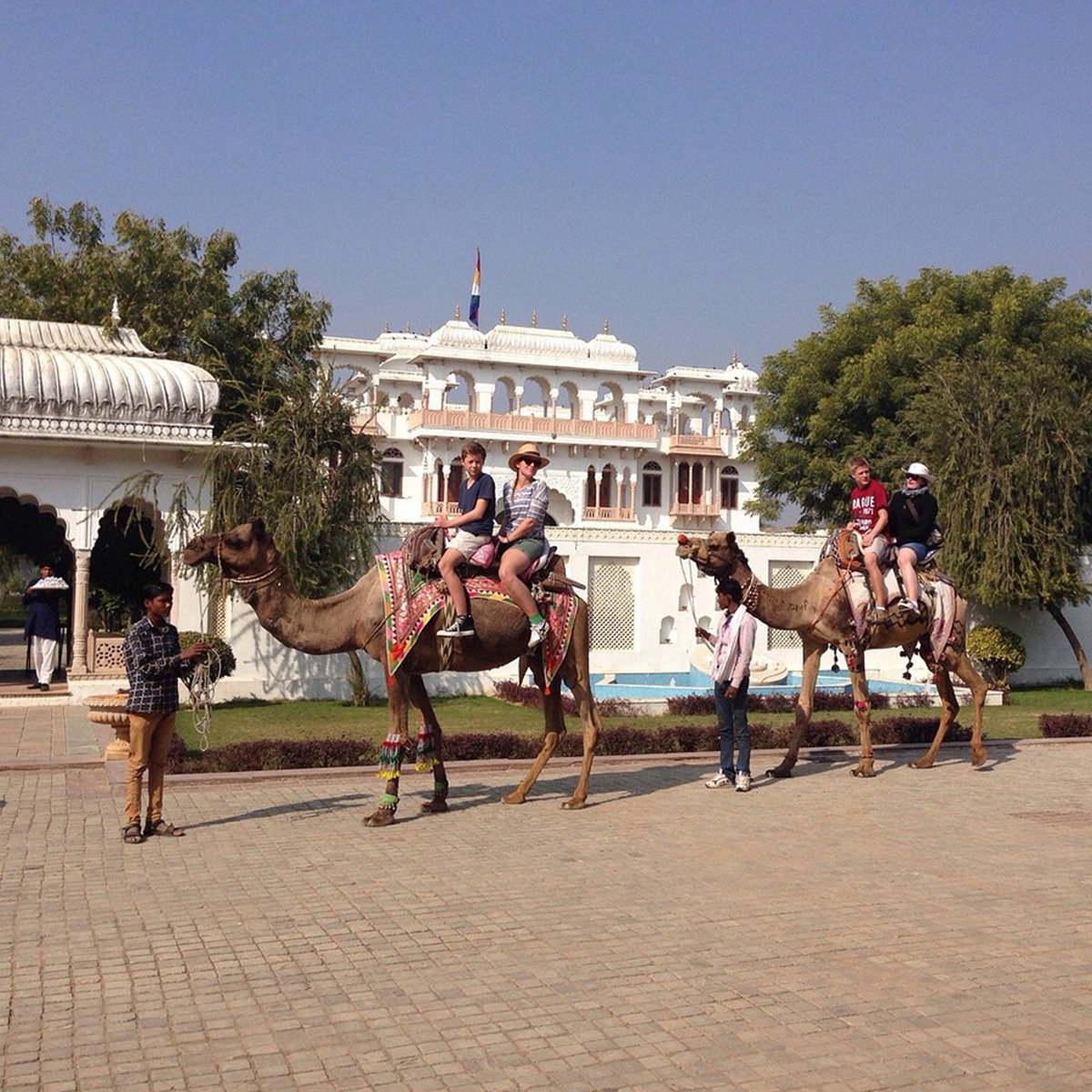
A food-focused visit can be balanced with other activities offered by the resort, depending on availability. These include camel safaris, camel cart rides, horse riding, music nights and cultural events, and time by the infinity pool.
Certain on-ground activities, including camel cart rides, jeep safaris, Ranthambore National Park visits, and horse safaris, require at least 24 hours' advance notice to the property. Confirm the details before travelling.
A well-planned visit can leave room for both activity and relaxation, allowing guests to enjoy the property without rushing from one experience to another.
Food Photography, Presentation, and the Memory of a Meal
Food is also an important part of the way people remember and share their travels. A beautifully arranged thali, the colours of a regional curry, the texture of freshly prepared bread, or a traditional sweet can become a visual record of the journey.

However, food photography should complement the experience rather than replace it.
Notice the Details
Look at the ingredients, textures, serving style, and accompaniments. A thali can reveal the variety of a meal more clearly than a photograph of a single dish.
When trying an unfamiliar preparation, ask about its ingredients or regional background. This adds context to the experience and helps you remember what made it distinctive.
Respect Local Food Customs
Dining practices differ between households, communities, and establishments. Follow the host's guidance where relevant, ask questions politely, and avoid assuming that every family or region follows the same customs.
If photographing a private dining setting or other guests, ask permission first.
Record What You Enjoyed
Travellers who want to remember their food experiences can note the names of dishes, ingredients, and places where they tried them. This is especially useful when exploring a cuisine with many regional variations.
Such notes can also help when choosing what to order during the rest of the trip.
Common Misconceptions About Royal Dining in Rajasthan
The idea of royal dining can create expectations that do not always reflect the diversity of Rajasthan's food culture.
Misconception 1: Every Traditional Dish Came from a Royal Kitchen
Many iconic Rajasthani dishes developed through everyday household cooking, community practices, local ingredients, and regional adaptation. Royal households were one influence among many.
Misconception 2: Royal Dining Always Means Expensive Food
Price alone does not define a meaningful dining experience. A simple regional meal can be memorable because of its flavour, preparation, setting, or connection with local traditions.
Misconception 3: All Rajasthani Food Is Extremely Spicy
Some dishes are strongly seasoned, but the cuisine includes a range of flavours and heat levels. Recipes vary, and diners can ask whether a dish can be prepared less spicy.
Misconception 4: Every Heritage Resort Serves the Same Traditional Menu
Heritage properties differ in their kitchens, menus, dining formats, and available experiences. Confirm the current offerings instead of assuming that a particular dish or thali is available.
Misconception 5: Vegetarian Food Is Limited to Basic Meals
Rajasthan has a diverse vegetarian food culture, including pulse-based dishes, gram-flour preparations, millet breads, vegetable curries, regional specialities, and sweets.
Misconception 6: Royal Dining Must Be Formal
A heritage-oriented meal can be relaxed and informal. The defining qualities may be the setting, the food, and the opportunity to enjoy the occasion rather than strict etiquette.
Understanding these distinctions makes it easier to approach Rajasthan's culinary traditions with realistic expectations and genuine curiosity.
A Sample One-Day Food and Heritage Itinerary
Travellers who want to make food part of a heritage-resort visit can use a flexible itinerary as a starting point. This is an example for planning, not a promise that every dish or activity will be available at Talabgaon Castle.

| Part of the Day | Suggested Experience | Food or Cultural Focus |
|---|---|---|
| Morning | Enjoy a relaxed breakfast and spend time in the surroundings | Ask about regional breakfast options where available |
| Late morning | Explore the property or choose a suitable activity | Appreciate the setting without rushing |
| Lunch | Plan a regional meal or thali if available | Explore dishes such as dal baati churma or gatte ki sabzi |
| Afternoon | Leave time for rest or leisure | Enjoy a slower pace rather than scheduling continuous activities |
| Early evening | Consider an available cultural or outdoor experience | Ask about the schedule and any advance arrangements |
| Dinner | Arrange a relaxed meal in the available dining setting | Ask about traditional dishes, seasonal options, and menu availability |
| After dinner | Spend time unwinding | Reflect on the dishes and experiences enjoyed during the day |
If you are visiting during a festival or special occasion, ask whether seasonal sweets or celebratory food options are available. Do not assume that a particular festival menu will be served unless the property confirms it.
Frequently Asked Questions About Traditional Rajasthani Food
1. What is a traditional Rajasthani food experience?
A traditional Rajasthani food experience involves exploring the state's regional dishes, ingredients, cooking techniques, and dining customs. It may include well-known preparations such as dal baati churma, gatte ki sabzi, ker sangri, regional breads, sweets, and traditional thalis.
2. What is the most famous food in Rajasthan?
Dal baati churma is among the most widely recognised dishes associated with Rajasthan. Other well-known preparations include gatte ki sabzi, ker sangri, laal maas, pyaaz kachori, ghewar, and malpua. The most representative dish can vary according to the region and the traveller's food preferences.
3. What dishes should first-time visitors try in Rajasthan?
First-time visitors may want to try dal baati churma, gatte ki sabzi, ker sangri, bajra roti, pyaaz kachori, and a traditional sweet such as ghewar. Travellers who eat meat may also be interested in laal maas or safed maas, depending on the menu and their spice preferences.
4. What is a Rajasthani thali?
A Rajasthani thali is a meal served with several dishes and accompaniments together. Depending on the menu, it may include breads, lentils, vegetables, regional specialities, pickles, chutneys, rice, and sweets. The composition varies by restaurant, region, and occasion.
5. What makes royal dining in Rajasthan different?
Royal-style dining may combine regional food, distinctive surroundings, thoughtful presentation, and a relaxed or celebratory atmosphere. The experience varies by property and should not be assumed to reproduce a historic royal menu.
6. Is Rajasthani cuisine mostly vegetarian?
Rajasthan has strong vegetarian traditions as well as established non-vegetarian cuisines. Vegetarian dishes include dal baati churma, gatte ki sabzi, ker sangri, and millet breads, while laal maas and safed maas are among the well-known meat preparations.
7. Is traditional Rajasthani food very spicy?
Some dishes can be spicy, but heat levels vary. Laal maas, for example, is often associated with a chilli-forward flavour, while other dishes may be milder. Ask the restaurant about the recipe and whether the spice level can be adjusted.
8. What is ker sangri, and why is it associated with Rajasthan?
Ker sangri is a regional preparation made with desert berries and beans. The ingredients are associated with arid environments and are commonly dried before cooking. The dish illustrates how local conditions have influenced Rajasthan's food traditions.
9. What is dal baati churma made from?
Dal baati churma combines lentil preparation, baked or roasted wheat-flour baati, and a sweet or savoury crushed wheat-based preparation known as churma. Recipes vary, particularly in seasoning, cooking methods, and the use of ghee.
10. Which Rajasthani sweets should travellers try?
Ghewar and malpua are two well-known sweets associated with Rajasthan. Other sweets may be available depending on the locality, season, and establishment. Travellers interested in festival specialities should ask about seasonal availability.
11. Is ghewar associated with a particular festival?
Ghewar is commonly associated with festivals such as Teej and Raksha Bandhan. It is known for its distinctive porous texture and may be finished with sugar syrup, rabri, nuts, or other toppings depending on the version.
12. What is the difference between laal maas and safed maas?
Laal maas is generally known for its red chilli-forward gravy, while safed maas is associated with a pale, often creamy gravy that may include yoghurt, nuts, or other ingredients. Recipes and spice levels differ between cooks and establishments.
13. Can I experience traditional Rajasthani dining at a heritage resort?
Some heritage resorts offer regional dishes, traditional dining settings, or meals designed to complement the property's atmosphere. Menus differ, so contact the property in advance to confirm the specific dishes and arrangements available during your stay.
14. Does Talabgaon Castle Heritage Resort offer traditional Rajasthani food?
Talabgaon Castle lists garden dining and a mud house lunch or buffet among its experiences. Guests seeking specific dishes or a traditional Rajasthani thali should contact the resort directly to confirm the current menu and availability.
15. Can I arrange garden dining at Talabgaon Castle?
Garden dining is listed among the resort's experiences. Confirm the current dining arrangements, timings, menu options, weather-related considerations, and any additional charges directly with the property.
16. Should I request a traditional menu before arriving at a heritage resort?
Yes, especially if particular dishes are important to your visit. Asking in advance gives the property an opportunity to clarify whether the dishes can be provided, whether advance arrangements are needed, and whether additional charges apply.
17. What should vegetarians know about Rajasthani cuisine?
Vegetarian travellers can explore a broad selection of dishes, including lentils, gram-flour preparations, vegetable curries, millet breads, and sweets. Those following strict dietary requirements should confirm ingredients and cooking methods, particularly the use of ghee, dairy, or other animal-derived products.
18. Can travellers with food allergies enjoy traditional Rajasthani meals?
Potentially, but they should communicate allergies clearly and confirm ingredients and preparation methods before eating. Dishes may contain wheat, gram flour, dairy, nuts, or other allergens. Travellers with serious allergies should also ask whether cross-contact can be avoided.
19. How can I include Rajasthani food in a Jaipur and Dausa trip?
Plan a few regional dishes into your itinerary, explore local food options, and ask your accommodation about available dining experiences. If staying at Talabgaon Castle, confirm the menu and dining arrangements before arrival and leave enough time to enjoy the meal without rushing between destinations.
20. What is the best way to plan a royal dining experience in Rajasthan?
Choose the type of meal you want, check the available menu, communicate dietary requirements, and confirm the setting, timing, and price. If you are planning a special occasion, discuss your preferences with the property well in advance.
Discover Rajasthan Through Its Food and Hospitality
Rajasthan's culinary traditions offer a way to experience the state beyond its famous monuments and landscapes. A plate of dal baati churma, a serving of ker sangri, a festive sweet, or a thoughtfully arranged regional meal can reveal something about the ingredients, customs, and cooking knowledge that have shaped the region.
A heritage-oriented stay can add another dimension by bringing dining together with the atmosphere of the property and the opportunity to enjoy the destination at a more relaxed pace.
At Talabgaon Castle Heritage Resort, guests can explore a heritage-inspired setting and consider dining experiences such as garden dining and a mud house lunch or buffet. For a visit centred on traditional Rajasthani cuisine, contact the resort directly to ask about current menus, regional dishes, meal arrangements, and any advance planning required.
Plan your heritage stay in Rajasthan and make regional food part of the journey. Confirm your accommodation and dining preferences in advance so that your visit reflects the flavours and experiences you most want to discover.
Make Regional Dining Part of Your Rajasthan Stay
Ask about current menus, garden dining, and the meal arrangements available for your travel dates.
